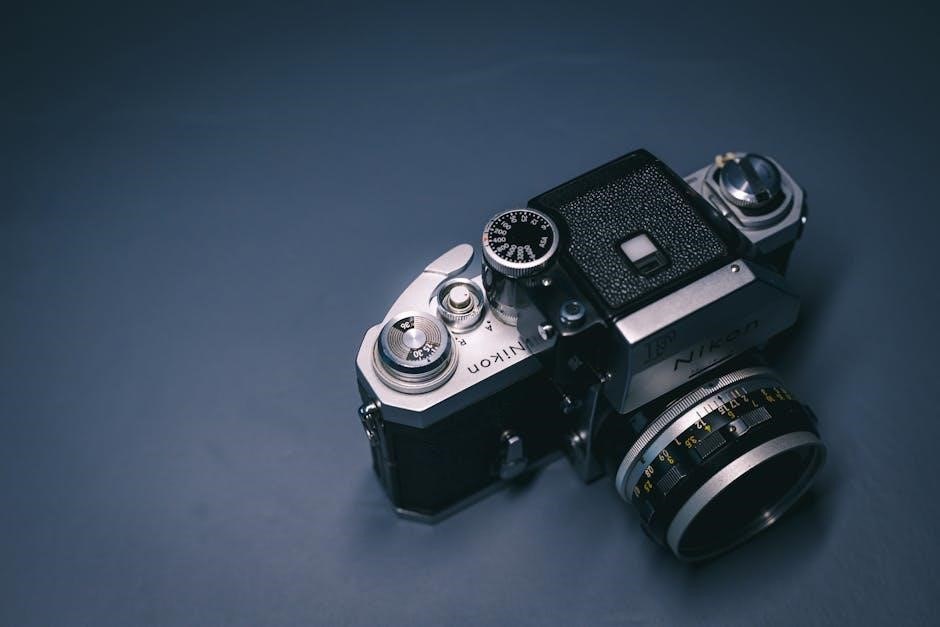
NikonClub.it serves as a vibrant community for Nikon enthusiasts, focusing on photographic culture and Nikon products. This manual assists D70 owners navigating its features.
What is the Nikon D70?
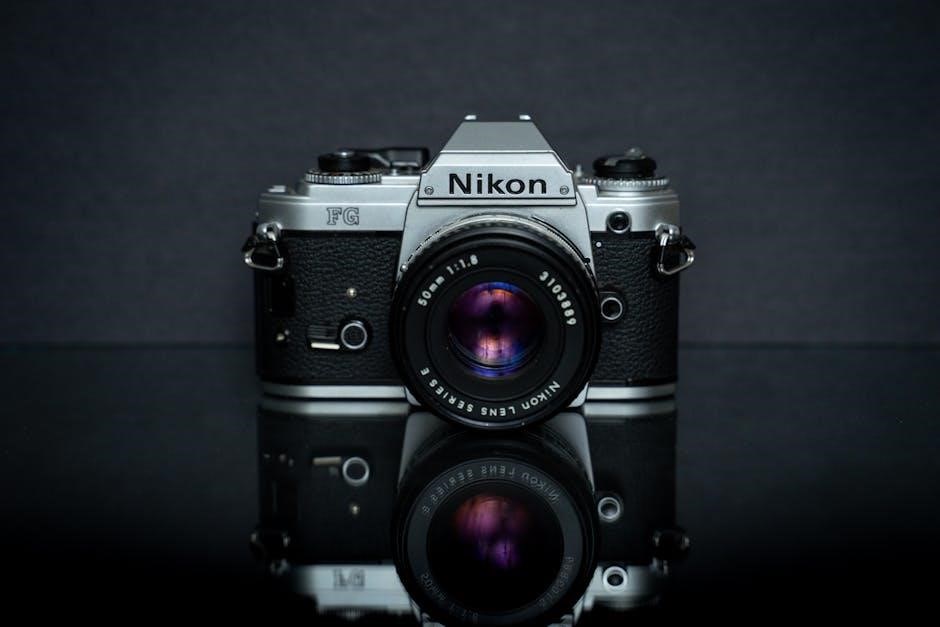
The Nikon D70, a celebrated digital SLR, marked a significant step for many photographers transitioning from film. Released in 2004, it quickly gained popularity within the NikonClub.it community and beyond, becoming a cornerstone for enthusiasts. It’s a 6.3-megapixel camera known for its robust build and impressive image quality for its time.
This camera represents a pivotal point in Nikon’s digital evolution, offering features previously found in more expensive models; The NikonClub.it forum frequently discusses the D70’s capabilities and its enduring appeal. It’s a camera designed for both beginners eager to learn and experienced photographers seeking a reliable and capable tool. Understanding its features, as detailed in this manual, unlocks its full potential.
Key Features and Specifications
The Nikon D70 boasts a 6.3-megapixel CCD sensor, delivering detailed images. It features a 9-point autofocus system, ensuring sharp focus across the frame – a topic often discussed on NikonClub.it. Its continuous shooting speed reaches 3 frames per second, capturing action effectively; The camera utilizes Nikon’s F-mount, compatible with a vast range of lenses.
Key specifications include an ISO range of 200-1600, providing flexibility in various lighting conditions. The D70 records images in both RAW and JPEG formats, catering to different editing preferences. The NikonClub.it community values its durable construction and intuitive controls. Its 2.0-inch LCD screen facilitates image review and menu navigation. It’s a well-rounded camera offering a blend of performance and accessibility.

Getting Started with Your D70
NikonClub.it’s community provides support for new users. Begin by familiarizing yourself with the camera’s layout and essential functions for optimal performance.
Unboxing and Initial Setup
Upon receiving your Nikon D70, carefully unpack the box, ensuring all components are present. These typically include the camera body, a kit lens (if purchased as a bundle), battery, battery charger, strap, USB cable, and various manuals. Before proceeding, inspect the camera body and lens for any physical damage incurred during shipping.
Initial setup involves connecting the battery charger to a power outlet and fully charging the battery. While the battery charges, take time to read through the provided documentation, particularly the quick start guide. Once charged, insert the battery into the designated compartment. The NikonClub.it community can offer further assistance if needed. Familiarize yourself with the camera’s basic layout and button functions before inserting a memory card.
Inserting the Battery and Memory Card
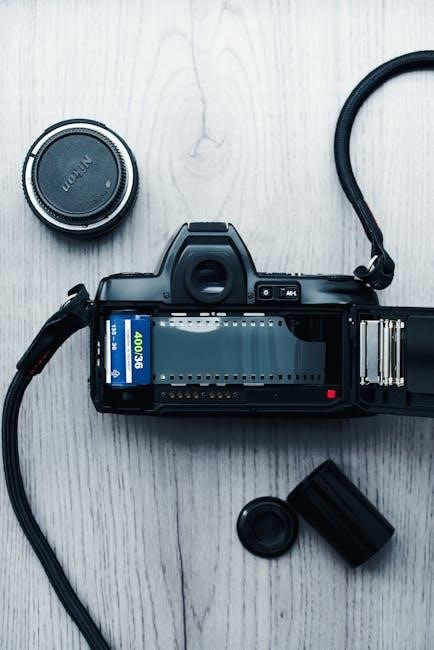
To insert the battery, locate the battery compartment door on the bottom of the Nikon D70. It usually has a locking mechanism; slide or press it to release. Insert the fully charged battery, ensuring the contacts align correctly. Securely close the compartment door until it clicks shut. Incorrect insertion can prevent the camera from powering on.
Next, locate the memory card slot, typically found on the side of the camera. The D70 supports CompactFlash (CF) cards. Gently insert the CF card into the slot until it clicks into place. Avoid forcing the card. The NikonClub.it forum often discusses compatible memory card brands. Ensure the card is fully seated to prevent data corruption. Power on the camera to verify both the battery and memory card are recognized.
Understanding the Camera Controls
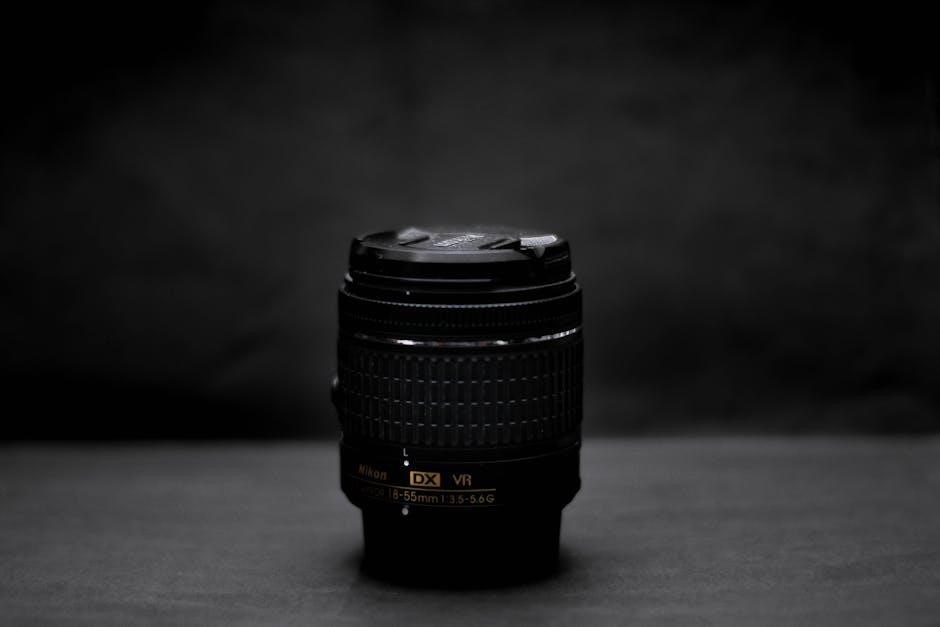
The Nikon D70 features a comprehensive array of controls. The Mode Dial, located on top, selects shooting modes like Auto, Program, Aperture Priority, Shutter Priority, and Manual. The main dial adjusts settings within these modes. Surrounding the shutter button are controls for ISO, white balance, and image quality.
The NikonClub.it community frequently discusses optimal control configurations. The rear panel houses buttons for menu navigation, image playback, and autofocus settings. The directional pad facilitates menu exploration; Familiarizing yourself with these controls is crucial for efficient operation. Experiment with each function to understand its impact on your images. Refer to the full manual for detailed explanations of each control’s purpose and functionality.
Shooting Modes Explained
NikonClub.it users often debate shooting modes. The D70 offers Auto, Program, Aperture Priority, Shutter Priority, and Manual modes for diverse photographic scenarios.
Auto Mode for Beginners
Auto mode on the Nikon D70 is designed for simplicity, making it ideal for those new to DSLR photography. The camera automatically selects the optimal settings – aperture, shutter speed, ISO, and white balance – based on the scene it detects. This “point-and-shoot” functionality removes the complexity of manual adjustments, allowing beginners to focus on composition and capturing the moment.
While convenient, Auto mode offers limited creative control. The camera prioritizes a well-exposed image, but may not always interpret the scene as the photographer intends. NikonClub.it discussions highlight that understanding the fundamentals, even when using Auto, enhances photographic learning. It’s a great starting point, but exploring other modes unlocks the D70’s full potential.
Program Auto (P) Mode
Program Auto (P) mode on the Nikon D70 offers a balance between convenience and control. The camera automatically sets both the aperture and shutter speed for proper exposure, but allows the photographer to override certain settings. You can adjust ISO, white balance, exposure compensation, and flash settings, providing more creative flexibility than full Auto mode.
This mode is excellent for situations where you want the camera to handle the technical aspects while still retaining some influence over the final image; Discussions on NikonClub.it suggest P mode is a stepping stone towards mastering aperture-priority or shutter-priority modes. It’s a versatile option for everyday shooting, offering a good compromise between ease of use and creative control.
Aperture Priority (A) Mode
Aperture Priority (A) mode on the Nikon D70 empowers you to control the depth of field, while the camera automatically selects the appropriate shutter speed for correct exposure. This is ideal for portraits where a shallow depth of field blurs the background, or landscapes needing everything in focus with a smaller aperture.
The NikonClub.it community frequently discusses utilizing A mode for creative control. Adjusting the aperture (f-stop) directly impacts how much of the image is sharp. Remember, a lower f-number (e.g., f/2.8) creates a shallower depth of field, while a higher f-number (e.g., f/16) increases it. Exposure compensation remains available for fine-tuning brightness.
Shutter Priority (S) Mode
Shutter Priority (S) mode on your Nikon D70 allows you to dictate the shutter speed, controlling motion blur and freezing action, while the camera automatically adjusts the aperture for proper exposure. This is perfect for capturing fast-moving subjects like sports or wildlife, or intentionally blurring motion for artistic effects like light trails.
The NikonClub.it community often shares tips on utilizing S mode for dynamic shots. Faster shutter speeds (e.g., 1/1000s) freeze motion, while slower speeds (e.g., 1/30s) create blur. Remember to consider image stabilization if using slower shutter speeds handheld. Exposure compensation is still available to refine the overall brightness of your images.
Manual (M) Mode
Manual (M) mode grants you complete creative control over both shutter speed and aperture on your Nikon D70. This mode requires a solid understanding of the exposure triangle – the relationship between aperture, shutter speed, and ISO. It’s ideal for challenging lighting situations or when you want a specific look that automatic modes can’t achieve.
The NikonClub.it community frequently discusses mastering M mode for artistic expression. Use the camera’s light meter as a guide, adjusting settings until the indicator reaches the center. Remember to check your histogram to ensure proper exposure and avoid clipping highlights or shadows. Experimentation is key to unlocking the full potential of Manual mode.
Focusing and Metering
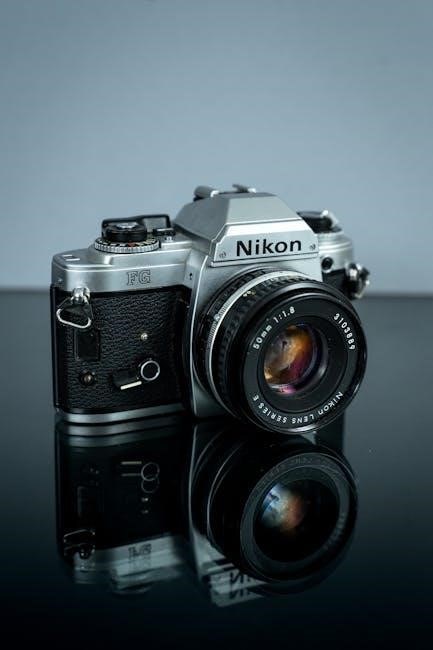
NikonClub.it users often discuss autofocus and metering intricacies. Mastering these settings is crucial for sharp, well-exposed images with your Nikon D70.
Autofocus Modes and Settings
The Nikon D70 offers several autofocus (AF) modes to suit various shooting scenarios. Single Servo AF (AF-S) is ideal for stationary subjects, locking focus when the shutter button is half-pressed. Continuous Servo AF (AF-C) tracks moving subjects, continuously adjusting focus as they move – perfect for sports or wildlife.
Dynamic-area AF allows you to select a focus point and the camera will continue to track the subject even if it moves slightly outside the initial point. Closest-subject priority AF is useful when you want the camera to automatically focus on the nearest object within the frame.
Accessing these settings through the camera menu allows customization based on your photographic needs. NikonClub.it discussions frequently highlight the importance of understanding these modes for optimal results, especially when dealing with challenging subjects or lighting conditions. Experimentation is key to finding what works best for you.
Metering Modes and Exposure Compensation
The Nikon D70 provides three primary metering modes: Matrix, Center-weighted, and Spot. Matrix metering analyzes the entire scene for balanced exposure, generally suitable for most situations. Center-weighted metering prioritizes the center of the frame, useful for portraits. Spot metering measures light from a very small area, ideal for challenging lighting or specific subject isolation.
Exposure compensation allows you to override the camera’s suggested exposure, brightening or darkening the image. This is crucial when shooting scenes with strong backlighting or high contrast.
NikonClub.it users often discuss utilizing exposure compensation in conjunction with different metering modes to achieve desired results. Understanding how these interact is vital for consistent and accurate exposures. Experiment with these settings to master your D70’s exposure control.
Navigating the Menu System
NikonClub.it highlights the D70’s menu for customization. Explore setup options, personalize settings, and efficiently control camera functions for optimal photographic experiences.
Customizing Camera Settings
The Nikon D70 offers extensive customization options to tailor the camera to your shooting style. NikonClub.it emphasizes the importance of exploring these settings. Begin by accessing the Setup menu, where you can adjust date/time, language, and file naming conventions. Dive deeper into the Custom Settings menu to personalize autofocus behavior, metering preferences, and image quality parameters.
You can fine-tune button assignments, display settings, and even the camera’s startup screen. Experiment with different settings to discover what works best for your photographic needs. Remember to document your changes, allowing you to revert to previous configurations if desired. Customization empowers you to maximize the D70’s potential and achieve consistently excellent results.
Understanding the Setup Menu
The Setup menu on the Nikon D70 is your central hub for fundamental camera configurations. As highlighted within the NikonClub.it community, mastering this menu is crucial for optimal performance. Here, you’ll find options to set the date, time, and regional display format. Crucially, you can also configure the file naming method, ensuring organized image storage.
Further options include language selection, beep sounds, and display brightness. You can also format memory cards and reset the camera to its factory default settings. Pay close attention to the ‘General Setup’ tab, which houses essential settings impacting overall camera operation. Regularly reviewing these settings ensures your D70 functions precisely as intended.
Working with Images
NikonClub.it users discuss image handling frequently; the D70 supports both RAW and JPEG formats, impacting editing flexibility and file size considerations.
Image Quality Settings (RAW vs. JPEG)
The Nikon D70 offers a crucial choice: shooting in RAW or JPEG format. NikonClub.it discussions highlight the benefits of each. JPEG files are compressed, resulting in smaller file sizes ready for immediate use and sharing, but with some loss of image data. This is ideal for casual shooting where extensive editing isn’t planned.
RAW files, conversely, contain all the data captured by the sensor. This provides maximum flexibility in post-processing, allowing for significant adjustments to exposure, white balance, and other parameters without degrading image quality. However, RAW files are considerably larger and require dedicated software for editing. Choosing between RAW and JPEG depends on your workflow and desired level of control over the final image.

Viewing and Deleting Images
After capturing images with your Nikon D70, reviewing them is essential; Utilize the camera’s playback mode, accessed via the playback button, to scroll through your photos on the LCD screen. You can zoom in to check focus and detail. NikonClub.it forums often discuss efficient image management.
Deleting unwanted images is straightforward. Select the image, press the delete button, and confirm. Be cautious, as deleted images are often unrecoverable! The D70 allows for single image deletion or selecting multiple images for batch deletion. Regularly reviewing and deleting images frees up valuable memory card space, ensuring you don’t run out of storage during important shoots. Remember to back up your keepers!
Troubleshooting Common Issues
NikonClub.it users frequently discuss flash and autofocus problems with the D40, a related model. Error messages and solutions are often shared within the community.
Fixing Common Error Messages
NikonClub.it’s community forums reveal frequent discussions surrounding Nikon camera issues, though specifically for the D70, detailed error message solutions are less readily available directly within the provided snippets. However, the consistent presence of user questions regarding functionality – like a non-functioning flash on a D40 – suggests a pattern of potential electronic glitches.
When encountering an error, first consult the camera’s display for a code. While specific D70 codes aren’t detailed here, the forum’s activity implies that resetting the camera to factory defaults can sometimes resolve software-related errors. If a problem persists, especially concerning accessories like a flash, consider checking connections and battery levels. The community’s emphasis on warranty issues (even without a receipt) highlights the importance of exploring official Nikon support channels if self-troubleshooting fails.
Dealing with Autofocus Problems
NikonClub.it’s discussions frequently touch upon lens compatibility and functionality, hinting at potential autofocus issues. A user’s query regarding the Nikon 70-300 AF-P lens and its operation with an FT1 adapter suggests autofocus can be a point of concern when mixing lenses and adapters. If autofocus isn’t working, ensure the lens is securely attached and the camera is set to the appropriate autofocus mode.
Check the lens contacts for cleanliness. Experiment with different autofocus modes (single-servo, continuous-servo) to see if one performs better. Insufficient light can also hinder autofocus; try increasing illumination or using the autofocus-assist beam (if available). If problems persist, consult the D70’s manual for specific troubleshooting steps related to autofocus settings and lens compatibility.

Maintenance and Care
NikonClub.it emphasizes the Nikon ecosystem, implying regular care is vital for longevity. Proper sensor cleaning, battery handling, and storage are crucial for optimal D70 performance.
Cleaning the Sensor
Maintaining a pristine sensor is paramount for image quality with your Nikon D70. Dust accumulation inevitably occurs, impacting photos with noticeable spots. NikonClub.it, as a dedicated Nikon community, underscores the importance of preventative measures and careful cleaning techniques.
Begin with the camera’s built-in sensor cleaning function, accessible through the setup menu. This utilizes ultrasonic vibration to dislodge dust. If this proves insufficient, consider a manual cleaning using a blower to gently remove particles. Avoid touching the sensor directly!
For stubborn debris, specialized sensor cleaning kits are available, including swabs and cleaning fluid. Follow the kit’s instructions meticulously. Improper cleaning can damage the sensor. If uncomfortable performing this yourself, seek professional cleaning services to ensure the D70’s sensor remains in optimal condition.
Battery Care and Storage
Proper battery maintenance extends the life and performance of your Nikon D70’s power source. As highlighted within the NikonClub.it community, understanding lithium-ion battery characteristics is crucial. Avoid completely discharging the battery, as this can reduce its capacity over time.
When storing the battery for extended periods, charge it to approximately 50-70% capacity. Store it in a cool, dry place, away from direct sunlight and extreme temperatures. Never store a fully charged or fully discharged battery for prolonged durations.
Use only the Nikon-supplied charger to prevent damage. Avoid short-circuiting the battery terminals. Regularly check the battery contacts for corrosion and clean them gently if necessary. Following these guidelines will ensure reliable power for your D70 during your photographic endeavors.